Not all journeys to motorsports are the same. Sometimes they come later, sometimes they come through an unexpected discovery of a new talent.
In this case, the love of motorsport came from a love of science, and the journey has been a lifelong desire to blend the two together.
Alex was born in North Georgia in a fairly middle-class family and fell in love with motorsports watching Formula 1 back in the early 2000s. Interested in both the science and the thrill of driving in racing, the budget did not exist for a full-time career un racing, however, and elected to focus on education instead of racing pursuits. Upon going to college at the University of North Georgia, fundamental science became his area of primary study, though the fire for competition did not extinguish fully.
While pursuing an undergraduate chemistry degree and physics minor at the University of North Georgia, Alex participated in the Atlanta Region Sports Club of America Autocross events for two and a half years when personal finances allowed. Most time spent doing autocross was in cars that were not of his own or family owned, as finances and a plethora of other details (like pursuing a hard science degree) did not allow time fully to drive his own vehicle.
“I ended up running a friend’s Miata that I cut my teeth on as the ‘tire warmer’ for him. Eventually I started getting closer and closer to his times within half a year, which was exciting, considering he had years of karting experience and other stuff.”
More seat time was craved however, as autocross only allows for about 4 minutes of actual driving. Luckily, he got the opportunity to become an instructor which opened a lot of doors and allowed him to drive a variety of different cars.
“The lead instructor came up to me and was like ‘hey, you’re pretty good. You wanna instruct to help out?’ and I was like sold immediately. I ended up meeting a lot of great people through instruction. As I didn’t have a car of my own, I would offer to cover their entry fees if they let me drive their car at the next event, and I would continue to instruct them. I think very few said no.”
How to afford a lot of entrance fees and buying seat time, while studying full-time for two degrees? Tutoring and teaching.
The opportunity to run in a variety of different cars was given, which would provide a lot of experience in a lot of different machinery, as well as getting the little seat time autocross provided and them some by driving several cars at one event. At this point though, the blending of science and motorsport had begun.
“I would literally tutor people in chemistry in order to afford entrance fees. That, and being a teaching assistant, or doing paid research. Both to save money for myself as well as afford the entry fees and buying seat time. I would then try and use what I learned teaching at the track and try to teach people how to drive quick using the scientific method. Change one thing at a time, each run. A lot of people dropped seconds quick. It was pretty exciting to see it for them!”
With the fact that teaching could lead to more autocross and motorsport, there was a motivation to get better at the scientific discipline. Being a better scientist and tutor would mean more seat time.
“I definitely would try and help out around the chemistry department more and tutor and teach more so I could get whatever gas money and cash I could to race. In hindsight, I think it did force myself to learn the science a little better.”
After several seasons hunting for a ride, Alex’s family splurged to buy a family car for them. Albeit one on a budget, to incentivize learning from a bare bones. It wasn’t competitive, but as Alex explains it got the job done.
“We did end up getting a gutted old Civic at one point. My dad got it for $2000, and it was a beast. Completely gutted, nothing on the inside. We ran it maybe for a season total over the course of 3 years or so. Had 10-year-old tires. It was nuts! Dad said he wasn’t going to buy new tires so I could learn car control, and that has been money well NOT spent.”
“Overall, though, I truly believe tutoring and teaching science helped my ability to pass on information in teaching racing as well, as those teaching skills were directly transferable.”
His autocross days ended though upon graduating from the University of North Georgia in the Spring of 2019 with a bachelor’s degree in chemistry and minor in physics and winning awards for services to the chemistry department. The next chapter in his motorsports and academic journey began: Working towards getting a PhD in Chemistry at University of Florida working under the Distinguished Professor George Christou, and joining the Formula SAE team at UF, Gator Motorsports.
“I would be a liar to say that I chose UF as my graduate school of choice only for their great chemistry. Other schools I was accepted to didn’t have FSAE teams, so it was definitely a draw. The combination of working for a truly phenomenal human being, chemist, and research advisor Dr. George Christou, and the tantalizing prospect of driving for a top tier Formula SAE team made the choice very clear for me. I recall telling then captain, Austin Jordan: ‘I don’t care what it takes, I’ll clean the floors if needed’ to get a shot at driving.”
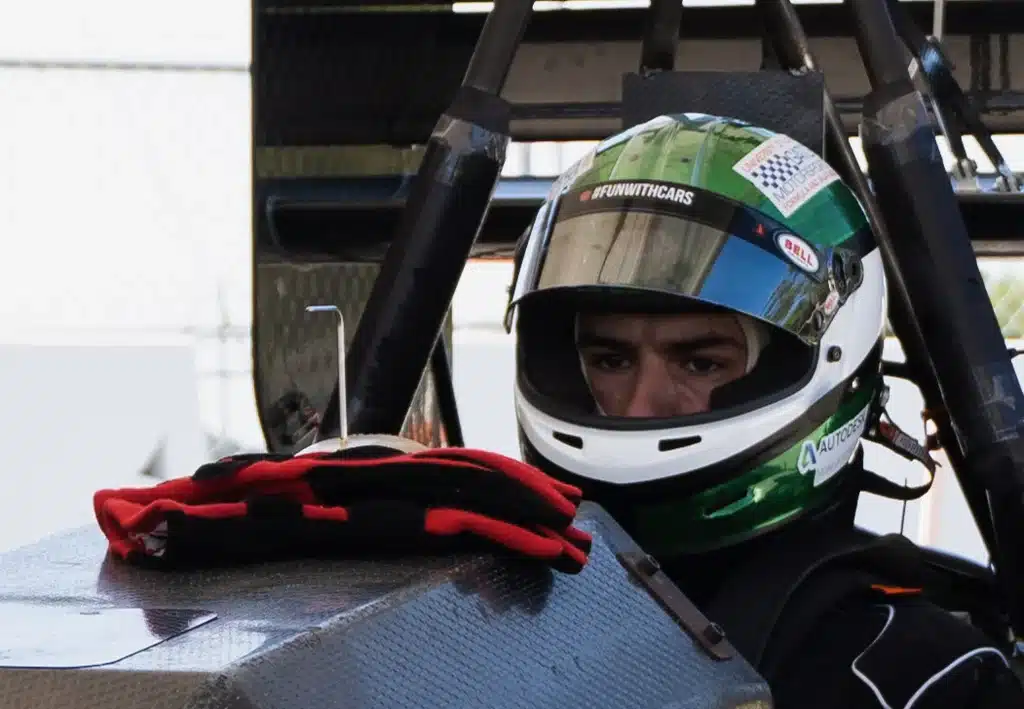
Alex got that opportunity shortly after joining Gator Motorsports in his first month.
“I have to thank Austin and then Gabe, the testing coordinator at the time, for giving the opportunity to drive at an accelerated pace. It’s not really something that typically happens with FSAE teams, because they are rightfully protective of their equipment.”
In his first proper go in the F19, Gator Motorsport’s 2019 competitor at their annual drive event for alumni where they also put new members in the car, Alex was 6 seconds faster than the next best new driver who had been driving the car previously for multiple test sessions. It was clear from there where his direction in the team would be going.
COVID-19 though, put a hold to everything, as it did with most. Formula FSAE competition was cancelled in 2020, but that meant time in 2021 to do other things karting to hone driving skills. Alex became the lead driver after the COVID-19 pandemic in 2021/22, and then the Driver Development Program lead that same year, utilizing his teaching experiences form his previous autocross endeavors.
“I made it a priority to bring back a more formal driver development program (DDP) to help train the next generation of drivers for the team using what I had learned as an instructor back from my autocross days. I was able to expand my knowledge of engineering further too, working with all of the engineers on the team, and it really helped me understand my place as a driver and as a whole the fundamentals of running a race team inside and out.
The 2021 season did not go exactly to plan for GMS though, as a faulty oil sensor caused the team to DNF a mere 200 feet from the finish line. Gutted, would be an understatement.
“It was tough to watch on the sidelines for sure. I had finished my stint in the car, which wasn’t the best to be honest, I sort of choked but everyone reassured me not hitting any cones or spinning was good enough. Obviously, you want to be as quick as you can but Daniel [the team captain for 2021] at the time was a touch more used to competition than I was and had the mental advantage. Lesson learned.”
“All of us who were like sophomores on the team were hungry. After struggling so much building a new car [GMS elected to build a brand-new car for 2021, instead of running their 2020 car] with all of the senior members graduating the year before, there really was not a lot of knowledge transfer, so we all were ready to do better and perform the next season. I learned the hard way I needed to step up driving, and I was ready to do so.”
Alex did just that by getting into competitive karting to continue to sharpen his skills as a driver.
“I would go about twice a month. Again, tutoring to get a little extra cash to afford it. Along with that, being the DDP lead, I brought along a group of people from the team so I could instruct them. As a whole we would just race the hell out of each other on the track so we would all get better.”
Throughout the 2021-2022 offseason Alex placed strongly in local races, winning enduros and local club races in preparation for the 2022 FSAE competition in Michigan. The team was also hard at work, refining their new monocoque design for their 2022 competitor. The struggles of the year before paid off.
“I will never forget that first test session. I told Conor Bowman, the captain for 2022, ‘y’all have built a rocket ship’. I could drive that car through telepathy. It was so good. I just had that gut feeling that this is a top 5 if not top 3 car.”
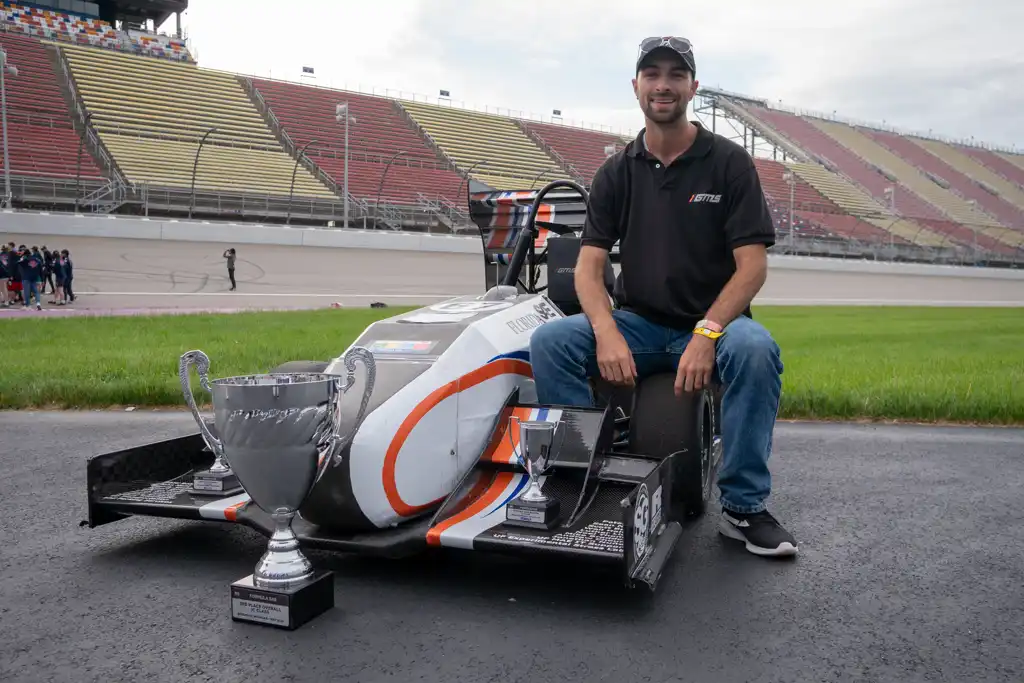
His gut feeling was accurate: GMS placed third overall in 2022, bringing home the team’s second podium finish in its 30-year history. They were also first in acceleration trials, and with Alex driving qualifying third in the Autocross section of the competition, only the second time the tram has been in the top three.
“I was very delightful to bring home a trophy for third place in autocross for the team. They worked so hard, tirelessly, to build such a good car. I am very proud to have said that I was part of a fantastic team that season that was able to bring those results. I cannot thank everyone at GMS for believing in me that season.”
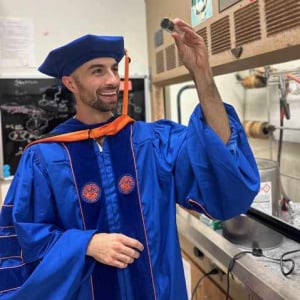
Author: Alex Diodati
A die-hard racer at heart, Alex is also a postdoctoral scientist at the University of Florida researching next generation molecular technologies that can be used for quantum computing.
