
Lead Simulator Consultant David Desjardins of Vthrotl Simulators has put together a Beginner’s Guide to Sim Racing Rigs which will be published in installments over the next few weeks. In this installment, David looks at entry-level sim racing rigs.
Overview
Introduction

When people first step into sim racing, cost is usually the biggest factor. Entry-level setups are all about affordability and accessibility, giving you a way to experience sim racing without overspending. These numbers are ballpark figures based on new, modern hardware. You can certainly spend less with used gear or creative DIY solutions, but what’s outlined here reflects a realistic starting point for most newcomers.
Budget: Approx. $1,500 – $3,000 CAD

The most affordable way into sim racing. Perfect for entertainment, younger drivers, or a first step before upgrading.
- Platform: Xbox Series X, PS5, or a mid-range PC (PC pushes cost to the higher end).
- Wheel and Pedals: Options like Logitech G923, Thrustmaster T248, or MOZA R3.
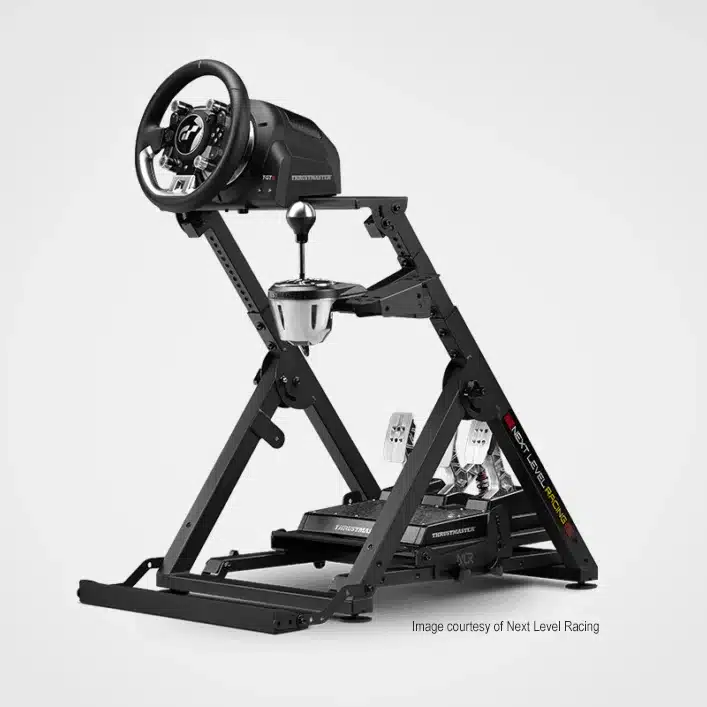
- Mounting Solution: Desk mount or wheel stand, or step up to a basic chassis with seat.
- Display and Audio: Single TV or monitor with headphones or speakers.
- Games: Forza Motorsport, Gran Turismo 7, F1 2025, etc. These titles are accessible and easy to get started with, though they’re more “game-like” compared to PC sims. Moving to PC later unlocks more advanced software with deeper realism and customization.
Expectation
Fun and immersive, but limited in realism and upgrade options compared to higher tiers. Entry-level gear uses lower-cost materials, has weaker force feedback, and less precise pedals. You’ll get a great first taste of sim racing, but it won’t replicate the detail or consistency of more advanced equipment. Still, it’s an excellent starting point for casual use or exploring whether you want to commit further.
Notes and Tips
- Pedal stability: Floor pedals often slide under braking. Brace against a wall or use carpet grips/anti-slip pads.
- Chairs: Office chairs roll around; lockable casters help.
- Wheel stands: Stronger than desk mounts and easy to fold away for storage. They’re perfect for couch racers, but can still slide with stiffer pedals.
- Chassis upgrades: Tubular or aluminum profile rigs add rigidity and allow future upgrades (stronger wheelbase, shifter, handbrake). Many require a racing seat, as it may not be included with the chassis.
- Foldable rigs with seats: Space-saving but less rigid, not ideal if you want to expand later.
- Displays: Whether using a TV or monitor, aim for the highest refresh rate available for smoother visuals.
Looking Ahead
Entry-level rigs are the gateway to sim racing, offering a taste of immersion without breaking the bank. But as your interest grows, you may find the limits of these systems quickly. That’s where the mid-tier setups come in, offering stronger performance, more realism, and a platform you can truly build on. In the next post, we’ll explore what stepping up to the mid-tier looks like, and why it’s often the sweet spot for many sim racers.

Author: David Desjardins
David Desjardins is a lifelong motorsports and racing game enthusiast whose passion for cars led him to racing simulators. Today, he builds high-end turnkey systems through Vthrotl, helping others experience the thrill and realism of sim racing.
