Introduction
What does it really take to build a lasting motorsport career?
That’s the one question at the heart of every episode of the Motorsport Prospects Podcast. In each episode, I put the same challenge to every guest — coaches, engineers, sponsorship experts, and industry veterans alike: “Based on your experience and expertise as a motorsport professional, what would be the one most important piece of advice you could offer a current or aspiring race driver?”
Ten guests. Ten answers. Here — in their own words — are the insights that matter most.
1. Get the Right People Around You — and Be Politely Persistent
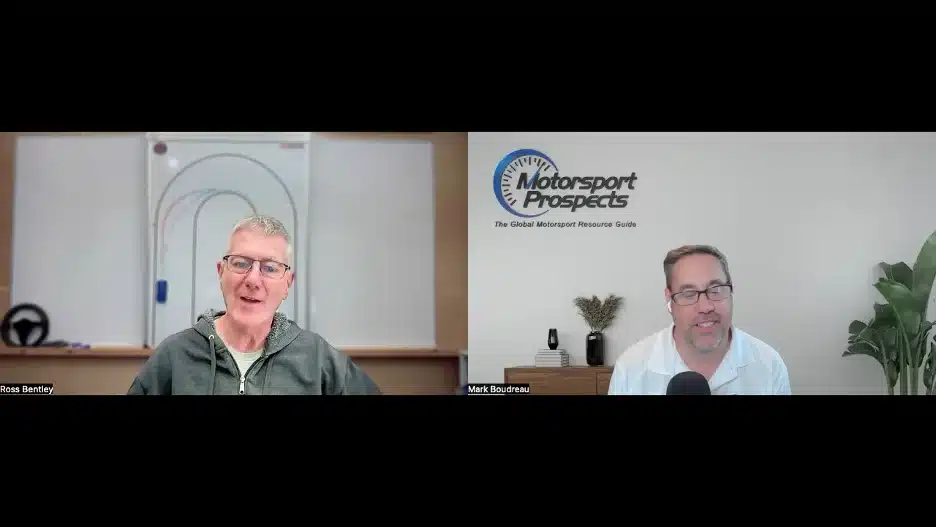
Ross Bentley | Driver Coach, Speed Secrets | Episode 1
“Get the right people around you and think about it as it’s a team. You’re the team leader.”
“People don’t buy what you do, they buy who you are.”
Bentley came to a defining realization partway through his own career: assembling the right people around you matter more than perfecting the sponsorship pitch. When your passion, character, and commitment come through, people go out of their way to help.
He also introduced one of the podcast’s most memorable phrases — polite persistence — drawn from a personal experience pitching a sponsor. After being told no three times over 18 months, he was eventually told “the reason we’re sponsoring you is because you are politely persistent.”
The lesson: Who you are off the track drives who supports you. Build your team, be genuine, follow up consistently — and don’t quit after the first no.
2. The Only Way You Won’t Make It Is If You Quit
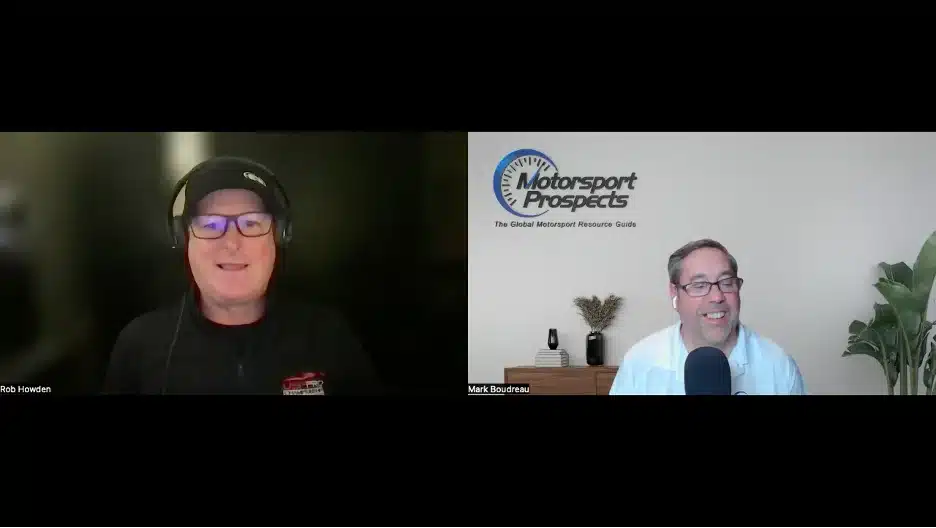
Rob Howden | Development Director & Commentator, USF Pro Championships | Episode 2
“The only way you will not become a professional race car driver is if you quit. Because everybody I’ve known that’s stuck with it eventually becomes a race car driver if you stay in the sport long enough.”
“Work ethic is the one thing that you can control as a driver.”
Howden has spent 30 years watching young drivers progress — and stall. His consistent observation: most drivers who fall short leave the sport too early, not because they lacked talent.
Whether your path leads to IndyCar, sports cars, gentleman driving, or coaching, staying in the sport creates opportunities that quitting closes permanently.
The lesson: Talent is not the deciding factor. Resilience, work ethic, and staying in the game long enough for opportunities to arrive — that’s what separates those who make it from those who don’t.
3. Differentiate Your Brand — Sponsors Don’t Care About Your Problems, They Care About Theirs
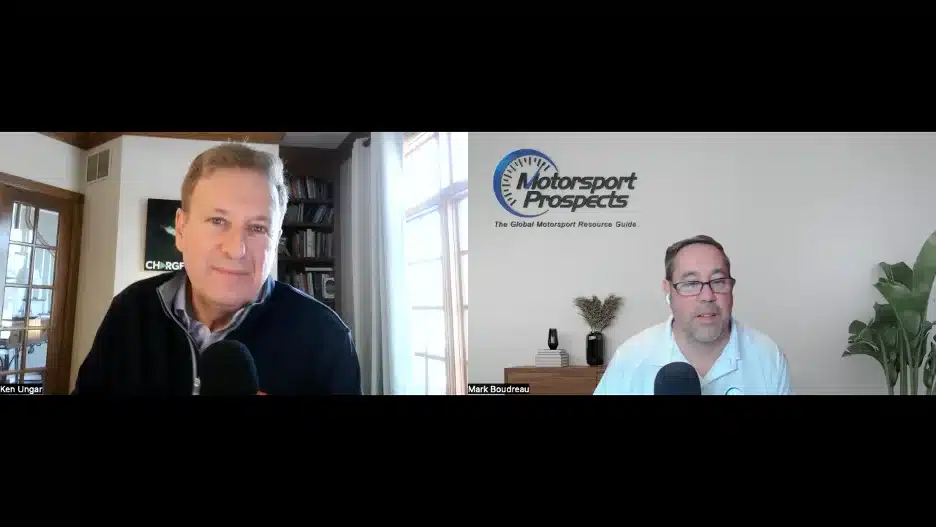
Ken Ungar | Founder, Charge Marketing Agency | Episode 3
“I think it’s differentiate your brand. And in order to do that, you have to create a personal brand. I think that’s kind of the number one advice I give to racers.”
“Sponsors don’t care about your problems. They care about their problems. The question is, what value are you bringing to me? What problem are you solving for me?”
Ungar estimates there are 20,000 sponsorship seekers in US racing alone competing for the same pool of investment. The drivers who stand out aren’t just fast — they understand what sponsors actually need, and they position themselves as the solution.
The lesson: Before you send your first proposal, build your personal brand. Understand your sponsor’s business problem. Your season budget is irrelevant to them — your value to them is not.
4. Think Long-Term — Plan in Increments, Not Just Results
Simon Hayes | Human Performance Consultant, Performance Physics | Episode 4
“You need to think about your long-term goal, what you want to achieve, be it over five or however many years, and look at how you’re going to develop that goal through short term increments.”
Hayes draws from the conditioning principle of periodization — a structured approach to long-term development used across elite sport — and applies it directly to driver careers. Every series you choose, every coach you hire, every season you plan should align with where you ultimately want to go.
He also makes a key distinction: wanting to be in Formula One and wanting to make a living as a professional racing driver are two very different goals — and they require different paths.
The lesson: Decide what you actually want. Then plan backwards from that goal. Review and adjust at the end of every season — not after every race.
5. Learn Your Craft — Go Deep, Be Patient
Enzo Mucci | Motorsport Mental Performance Coach, Base Mental Fitness | Episode 5
“Learn your craft. Go deep into your craft in terms of learn how to drive. And it sounds so damn basic… but you’d be surprised at the amount of drivers that are so worried and obsessed about the result and being P1… that they’re not keeping their eye on the actual skill of driving a car.”
“Get your head on the craft and really spend your hours not going to the gym but actually learning what you’ve got to do and getting good at it. And it pays dividends at the end.”
Mucci sees the same pattern at every level from karting to F1: drivers rushing to the result instead of mastering the process. The best in the world — Verstappen, Schumacher, Räikkönen — are engineers on wheels. They understand the car as deeply as any technician.
The lesson: Stop worrying about where you rank. Start obsessing over the quality of your driving. Craft takes patience — but it compounds.
6. You Have to Be a Good Student
Dan DeMonte | CRO & Co-Owner, Skip Barber Racing School | Episode 6
“You have to be a good student. If you’re not a good student specifically in this industry, you will be outdistanced no matter what your inherent talents are.”
DeMonte draws from 50 years of Skip Barber’s legacy — 400,000 alumni, from Alexander Rossi to Colton Herta — and the throughline is clear: coachability is the trait that converts raw talent into professional results. Verstappen, he notes, doesn’t just wake up fast. He works relentlessly hard and remains an exceptional student of the sport.
The lesson: Talent gets you in the door. Being a great student — staying open to feedback, applying what you learn, improving with intent — is what keeps you there.
7. If You’re Not Sim Racing, You’re Already Behind
Paul Crawford | Motorsport UK | Episode 7
“Now we are in a place where the hardware and the software available in terms of simulators… it can’t be ignored.”
“If you’re in a world now where you’re racing and you’re not doing it, you are going to be disadvantaged soon.”
Crawford makes a practical, forward-looking case: sim racing fills the seat time gap that budget and calendar restrictions create. Max Verstappen does it. Lando Norris does it. Bortoletto credits it. And the generation coming through karting right now treats it as completely normal.
He also dispels the cost myth — some of the fastest sim racers in the world use entry-level Logitech wheels. It’s technique, not equipment, that matters.
The lesson: Sim racing is no longer optional — it’s a development tool that serious drivers use to stay sharp, learn tracks, and keep their eye in between race weekends.
8. Choose Your Support Team Wisely and Be Authentic
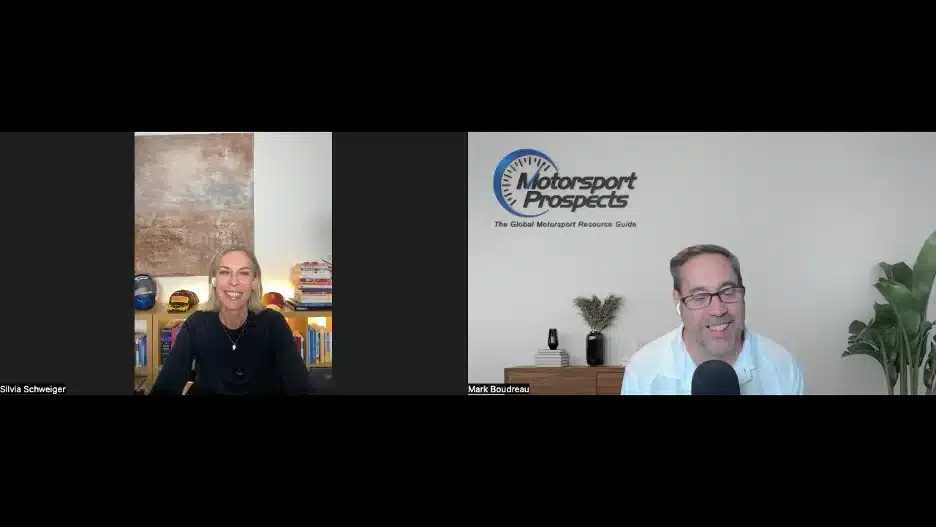
Silvia Schweiger | Motorsport Sponsorship Strategist | Episode 8
“Be very careful and try to understand who are the people you want to work with and that you want to surround yourself with.”
“What the drivers do on track is obviously very important, but what they represent and they do off track — their values, their beliefs, what they do in their spare time — is very important as well.”
“I always try to understand who is the person that is behind the helmet, behind the visor — not just the guy or the person that is driving.”
Schweiger speaks from hard-won industry experience: too many young drivers and their families trust the wrong people at the wrong moments, simply because they don’t know who to verify. Her advice is direct — do your research, check track records, ensure the people around you share your values. And know that investors and sponsors do the same due diligence on you.
The lesson: Choose your team — agents, coaches, commercial partners — as carefully as a sponsor chooses you. Your off-track behavior and values are as visible as your lap times.
9. Get a Professional on Your Side — Build Your Toolbox Early
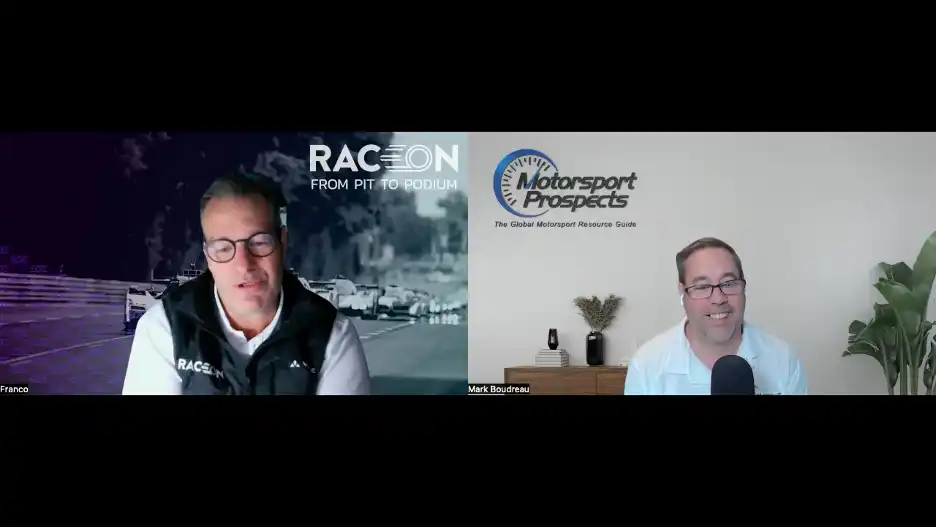
Franco Chiocchetti | Co-Founder, Race On | Episode 9
“Get a professional on your side.”
“You need to see your career like a toolbox — a mechanic’s toolbox. Your task is to fill each drawer with tools. Because if you are one day in the desert somewhere working on a Dakar car and you have a specific problem, you need to have the tool in your toolbox to fix that problem.”
“Your learning and growth will not be exponential — and it needs to be exponential.”
Chiocchetti argues that working alongside experienced engineers and professionals in the early stages of your career creates compound growth — similar to compounding interest. Two intense, expert-supported years will develop a driver faster than five years muddling through alone.
The lesson: Invest early in the right expertise around you. Every professional mentor, coach, and engineer adds a tool to your career toolbox. You will need those tools at critical moments — make sure they’re there.
10. Know Your Car
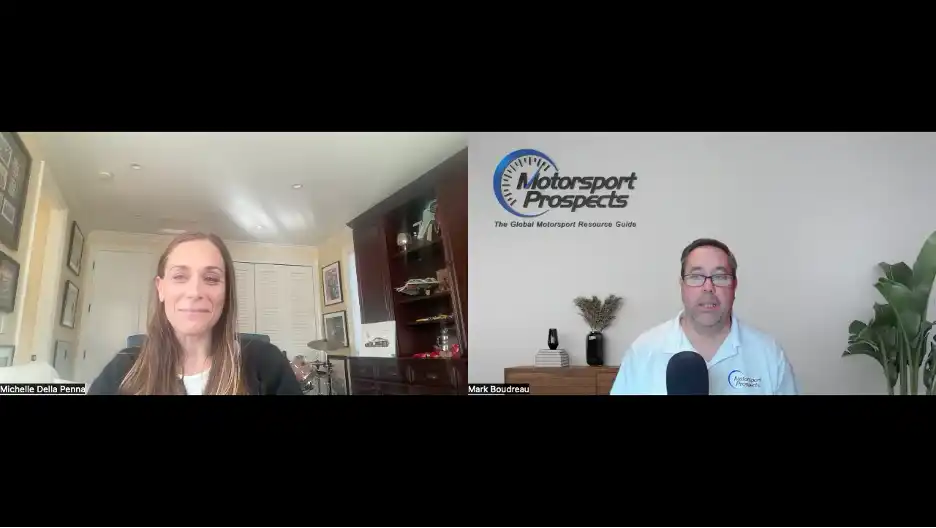
Michelle Della Penna | Founder, Della Penna Foundation | Episode 10
“I think the most important thing, especially for drivers up and coming currently, is to know the car.”
“As a driver, the best way to learn how to modify and finesse your own driving is to know what the car is doing. You will have a better communication with your crew as well, because you’ll be able to tell them what the car is doing, what it’s not doing, what you need it to do — and then you will all be able to work together.”
Della Penna draws on decades of motorsport family experience and her foundation’s work with young drivers: the ones who understand basic car mechanics, physics, and engineering communicate better, adapt faster, and develop a more complete racing intelligence. Racing, she notes, is STEM — and the greatest drivers have always had a holistic understanding of what’s happening beneath them.
The lesson: You don’t need to be a mechanic. But you do need to understand your car. Stay in the garage. Ask questions. The relationship between a driver and their crew is built on communication — and that starts with understanding the machine.
Themes Across Episodes
Across 10 conversations with some of motorsport’s most respected professionals, several powerful themes emerge — reinforced independently, from completely different corners of the industry.
Theme 1: The People Around You Define Your Career
Ross Bentley says build your team and be the kind of person people want to help. Silvia Schweiger says do your due diligence on every person in your inner circle. Franco Chiocchetti says get experienced professionals around you early and let growth compound.
Three guests. Three industries. One message: motorsport careers are built on relationships — choose yours deliberately.
Theme 2: Learning Never Stops — and Coachability Is the Edge
Enzo Mucci says go deep into your craft. Dan DeMonte says you will be outdistanced without being a great student. Michelle Della Penna says know your car. Rob Howden says staying in the sport is the prerequisite for everything else.
The drivers who make it are perpetual learners. Not just of driving technique, but of engineering, strategy, business, and self.
Theme 3: You Are a Brand Whether You Manage It or Not
Ken Ungar makes the case directly — differentiate your brand or disappear in the crowd of 20,000 sponsorship seekers. Ross Bentley echoes it: “People don’t buy what you do, they buy who you are.” Silvia Schweiger extends it off-track — your values, your behavior, and your associations are all part of what sponsors and teams evaluate.
Your personal brand is active even when you’re not managing it. Every interaction, every post, every paddock conversation either builds it or erodes it.
Theme 4: Long-Term Thinking Separates Professionals from Everyone Else
Simon Hayes frames it as periodization — structured planning in short-term increments toward a long-term goal. Rob Howden frames it as persistence — staying in long enough for opportunities to arrive. Franco Chiocchetti frames it as compound interest — investing early in expertise so growth accelerates over time.
The drivers who succeed think in careers, not championships.
Theme 5: Technology Is a Non-Negotiable Part of the Modern Toolkit
Paul Crawford argues that sim racing is no longer a nice-to-have — it’s an obligation. Michelle Della Penna argues that understanding car technology and physics is fundamental to driver development at every level. Enzo Mucci points to how the best drivers — Verstappen, Schumacher, Räikkönen — are “engineers on wheels.”
The modern race driver is not just an athlete. They are a technologist.
Conclusion
Across every episode, one truth comes through clearly:
Success in motorsport is not accidental. It is built — with the right people, the right plan, the right mindset, and the right commitment to your craft.
The ten professionals featured on the Motorsport Prospects Podcast have collectively spent decades at the highest levels of the sport. Their advice is not theoretical — it is lived, tested, and proven.
Apply these lessons consistently, and you give yourself the best possible foundation to move forward in one of the most competitive industries in the world.
Want more expert insights like these? Subscribe to the weekly Motorsport Prospects Podcast for practical advice on driver development, racecraft, mindset, sponsorship, and the business of being a race driver — available on all major podcast platforms right now.

Author: Mark Boudreau
Mark is the publisher of Motorsport Prospects and the host of the Motorsport Prospects Podcast. As a lawyer, he applies his legal background and research skills to assist race drivers by showcasing the resources they need to make their motorsport careers happen.
