Motorsport sponsorship is hard to get but how ready are you? This edition of the Business of Being a Race Driver asks that question and provides some answers and advice to assist you in your sponsorship acquisition efforts.
Overview
The Business of Racing
The Business Side of Racing with Lawyer Ed Holloran
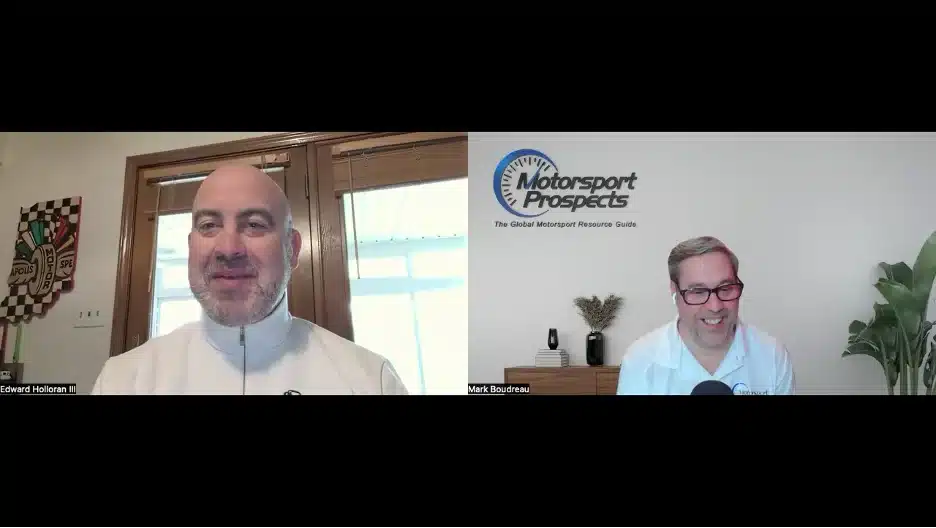
On the podcast this week I speak with motorsport lawyer Ed Holloran. Ed explains the importance of treating your racing career as a business and offers critical advice that can save you money in both the short and long-term.
Listen to the full episode here!
How to Get More Out of Your Sponsorship Outreach
Most athletes don’t have an outreach problem. They have an outreach strategy problem.
They send emails, messages on LinkedIn, contact brands on Instagram and perhaps even send dozens of sponsorship proposals. Then… nothing. A few replies, plenty of silence and maybe the occasional “thanks, but no thanks.” The natural reaction is to think, “I just need to contact more brands.”
But more outreach isn’t necessarily the answer. If your approach isn’t working, sending 100 more emails using the same strategy will simply give you 100 more opportunities to be ignored. The goal isn’t to do more outreach. It’s to get more from every piece of outreach you do.
Read the full post about how to maximize your outreach here.
Why Coca-Cola Sponsors Racing

Al Rondon, Senior Marketing Director of Sports & Entertainment at Coca-Cola advises racers seeking sponsorship to find ways they can help companies connect with fans and deliver on their objectives.
Don’t Send K1 Race Gear a Sponsorship Deck
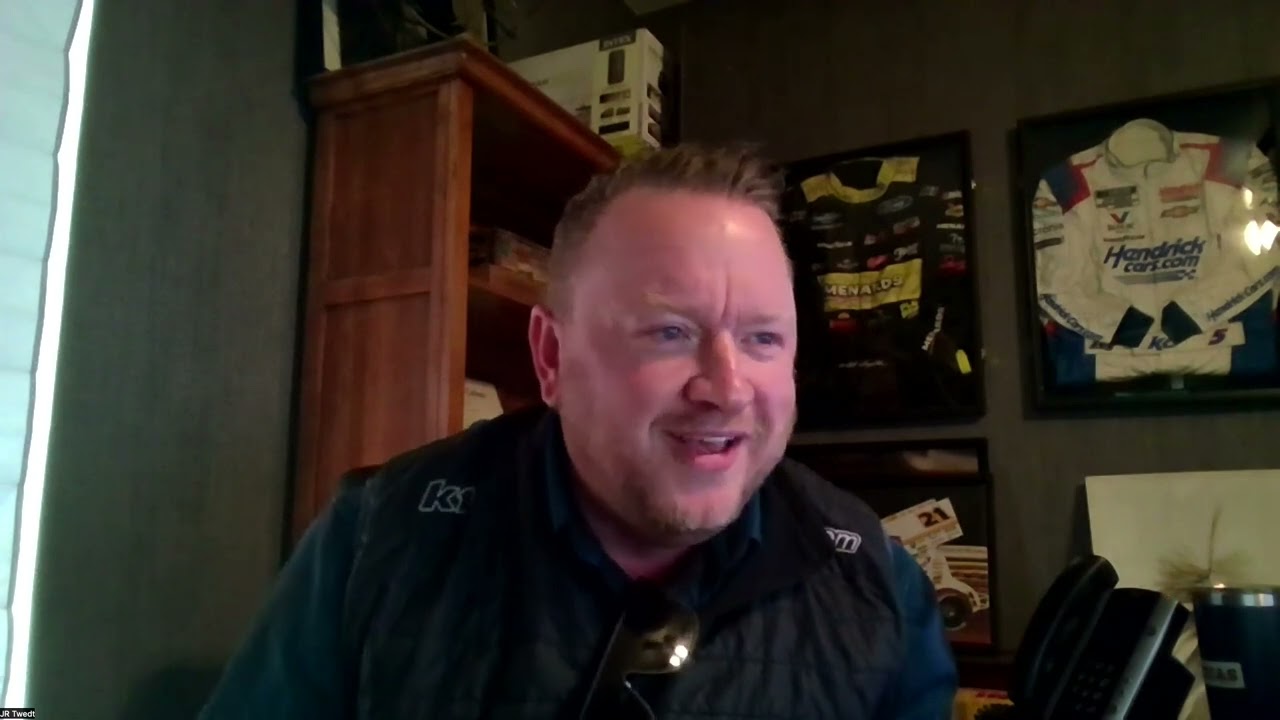
“I don’t like decks. And if any of you guys are thinking of sending one — don’t.”
JR Twedt, President of K1 RaceGear, on why the pitch deck fails his brand. His reason is one word: nuance.
A deck full of impressions can’t show what level you’re actually racing at, or what you actually need. As he puts it, on a 10 or 15-race season the thing that matters “might not be a million-dollar sponsor — it might be a right rear tire, it might be a shock deal.”
And know the math you’re being measured against: “My ratio is 5 to 1. I’m going to give you a suit — I want five back”
Erica Sietsma & Megan Meyer-Lingner: Proving Your Value Beyond the Racetrack
Erica Sietsma, Founder and CEO of Autofluencer, and Megan Meyer-Lingner, Head of Motorsports and Creator Strategy, join the Women’s Motorsports Network Podcast to discuss how data, authentic content, and long-term relationships can transform motorsports sponsorship.
Erica shares how approximately 25 years in automotive software eventually led her away from dealership technology and toward the passion-driven motorsports and automotive aftermarket industries. Megan explains how growing up in an NHRA Top Alcohol Dragster family, studying graphic design, racing professionally, managing sponsor relationships, and manually tracking social-media results prepared her for a new role helping develop Autofluencer.
The conversation explores measuring earned media value, providing sponsor reports, creating content away from the racetrack, using products authentically, reaching non-automotive sponsors, dealing with rejection, building relationships, and understanding that sponsorship value is about much more than race results.
This episode is essential listening for racers, teams, motorsports creators, builders, podcasters, and anyone trying to turn audience engagement into stronger brand partnerships.
You can listen to the episode here.
Racership Partners With MNRL and Y0LABS
Racership has partnered with MNRL and Y0LABS to provide branding, content development and media support tools in an effort help grassroots and emerging racers better showcase their accomplishments and prepare for sponsorship opportunities.
PRI has all the details here.
How Sponsors Ready Are You?
In this episode of the Motorsport Sponsorship Podcast, Belinda explores what being sponsor ready really means and why it goes well beyond having a proposal ready to send.
We look at the different areas that can influence how prepared you are for sponsorship, from your personal brand and online presence to communication, networking and professionalism — and why identifying your gaps before an opportunity arrives matters.
Because you don’t need to have everything perfect.
But you do need to know where you’re starting. Listen to the episode here.
Why You Should Never Give Up Featuring Scott Goodyear
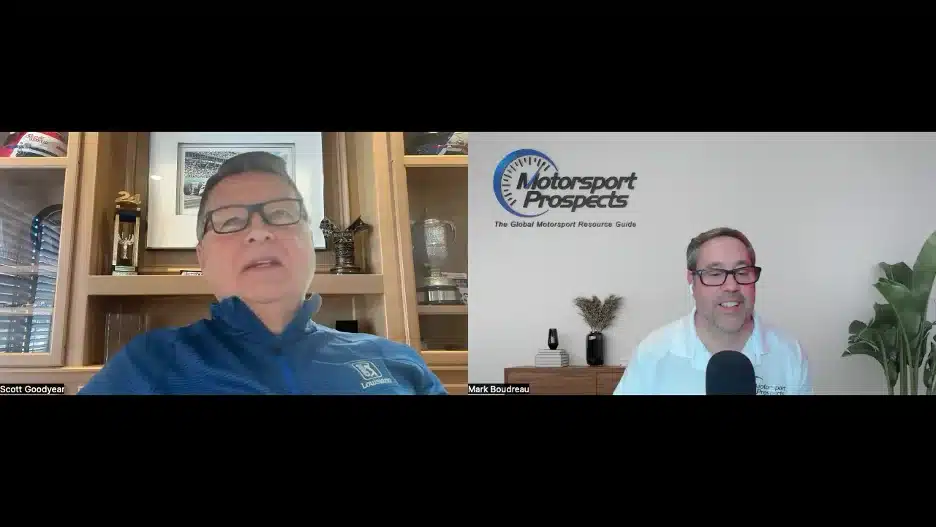
This week on the podcast is a special extended edition of the podcast featuring IndyCar winner Scott Goodyear. Scott explains the importance of never giving up both on and off the track. Scott also explains his role as the race director of the F4 United States and FR Americas Championships and recounts some great motorsport stories from his motorsport career.
The episode drops Wednesday, September 2nd, 2026 at 10:00 AM EST. You can listen to the episode and subscribe to the podcast on your favourite podcast platform here.
Promoting the Big House (ft. Marty Fiolka)
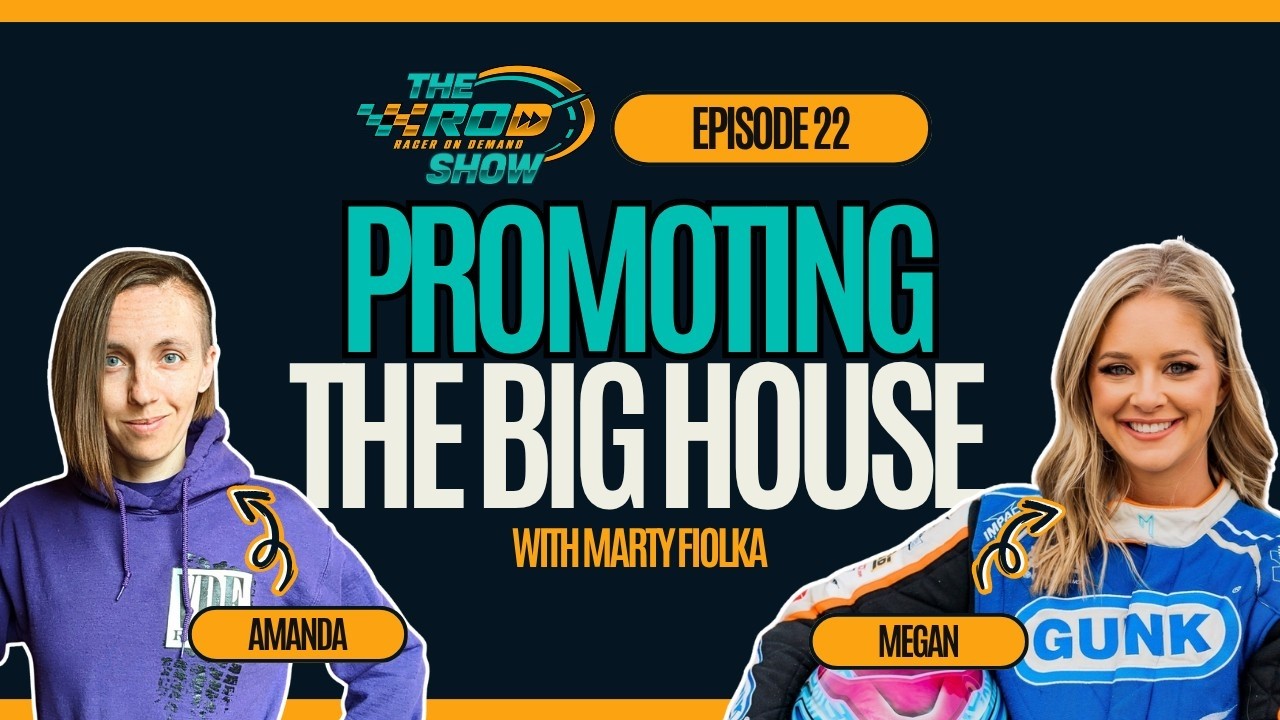
Amanda and Megan of Racer on Demand sit down with a true titan of the off-road industry, Marty Fiolka. Marty is the author of _1,000 Miles to Glory_, producer of the iconic documentary _Dust to Glory_, and the Promoter and Marketing Director for Crandon International Off-Road Raceway—the legendary “Big House.” But this isn’t just a behind-the-scenes look at the biggest festival in short-course off-road racing; it is a masterclass in shifting your mindset from static “stickers and stats” to high-impact, experiential brand activation. Whether you’re trying to figure out how a world-class track secures massive partnerships with brands like Red Bull, RAM, and Polaris, or how you can make your team a legitimate promotional asset in the pits, this episode is the blueprint you need to professionalize your program.
When Does a Driver Actually Start Earning Money?
One of the questions families ask me least often is one of the most important. When does a driver actually start earning money? The answer surprises almost everyone, and not pleasantly. Understanding it early changes how a family plans the entire journey. Read Dan Wells’ thoughts on the matter here.
Dan also has some great advice from his appearance on the Motorsport Prospects Podcast here.
General Motorsport Marketing Advice & Resources
Motorsports Sponsorship Contract – 14 Steps to a Signed Deal

A motorsports sponsorship contract typically takes 3 to 6 months to finalize and involves 14 distinct steps – from the initial idea to legal signing. Understanding these steps and the decision points between them is what separates brands that navigate the process efficiently from those that stall at the proposal stage or, worse, sign contracts that underserve their commercial objectives.
This guide by RTR Sports Marketing is written for brand and commercial leaders – CFOs, heads of brand and partnerships, and the boards signing off on the investment – and for companies approaching motorsport or sports sponsorship activation for the first time. It assumes you are on the buy side – a brand considering sponsoring a team, athlete, or event – and walks through the full process in the sequence it actually occurs.
You can read the guide here.
The Costs of Racing
Surviving the Road to Indy: The Real Costs of Chasing IndyCar

The Road to Indy is often presented as a clear progression toward IndyCar, but the reality is far more complicated—and expensive. This FanAmp feature examines the financial and personal pressures facing drivers in USF2000 and USF Pro 2000, from the constant search for sponsorship to the relentless demands of testing, training and competing. It offers a candid look at what it really takes to keep moving up the ladder when talent is only one part of the equation.
Author: Mark Boudreau
Mark is the publisher of Motorsport Prospects and the host of the Motorsport Prospects Podcast. As a lawyer, he applies his legal background and research skills to assist race drivers by showcasing the resources they need to make their motorsport careers happen.
